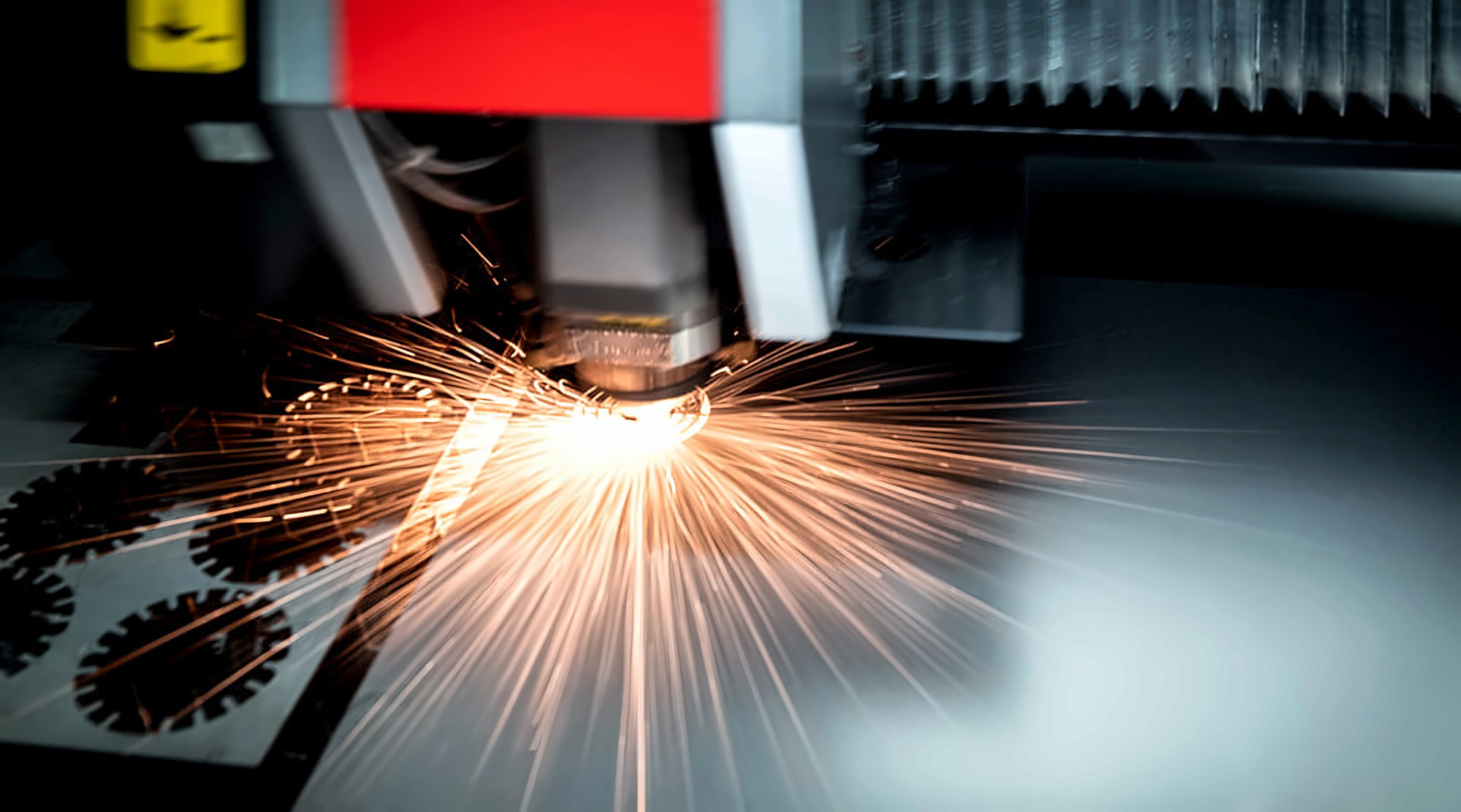
In a laser cutting workshop, the ability to respond to orders depends as much on machine programming as on the resources needed to keep the machines running. The availability of assist gas is one of those factors that must be coordinated with production.
Bilaser, a company in Gipuzkoa specialising in laser cutting and metal bending, decided to become self-sufficient in this supply through on-site nitrogen generation. Its aim was to reduce the work involved in changing racks and achieve a more stable workflow.
GasN2 developed an installation based on the GN27HP generator, which makes it possible to produce its own nitrogen and condition it at high pressure for the industrial process.
The goal: reducing interruptions linked to gas supply
Production at Bilaser requires coordinating material preparation, cutting work, bending and machine availability. When nitrogen is delivered in racks, deliveries, storage and replacement operations must also be planned.
Bilaser was using 14 racks of 270 m³ a month, which meant 10 resupply trips a month. Staff had to connect and disconnect the supply containers each time they were changed.
Bilaser wanted to simplify this work to devote more resources to production, while maintaining the gas conditions required by its cutting equipment.
The GasN2 solution: high-purity, high-pressure GN27HP
The installed system offers a nominal output of 24 Nm³/h, with a nitrogen purity of 99.995% and recompression up to 300 bar.
Generation starts from conditioned atmospheric air. After separating the nitrogen, the system includes a recompression stage to integrate it into the high-pressure supply infrastructure.
System components and parameters
The installation includes air compression and treatment in accordance with ISO 8573-1, a 24 Nm³/h GN27HP generator and recompression up to 300 bar for use in industrial processes.
Monitoring for day-to-day management
The solution features remote connection, traceability and digital display of operation. This information makes it easier to monitor nitrogen production parameters and plan maintenance.
The installation is designed for continuous operation and has a modular architecture.
Benefits: smoother operations in the laser cutting area
Bilaser has achieved full self-sufficiency in nitrogen: it no longer depends on external suppliers or road transport. In practice, the auxiliary tasks of receiving and replacing racks have disappeared.
Eliminating rack changes helps keep work organisation more stable by avoiding interventions related to external supply. The main benefit is operational: integrating the gas into the plant’s own infrastructure.
Self-generation provides greater autonomy and supply availability better suited to the process.
Transport associated with the previous model
Transporting the racks generated more than 2,880 kg of CO₂ a year. Eliminating it is equivalent to planting 202 trees.
A supply integrated into industrial productivity
The Bilaser case shows that operational continuity also depends on how equipment consumables are supplied. Nitrogen self-generation makes it possible to address this need from an engineering and production organisation perspective.
Learn more about nitrogen in laser cutting, read the Bilaser success story or explore our nitrogen generators.
If you would like to study a supply solution tailored to your cutting processes, contact the GasN2 technical team.