
In the production of cured sausages, maintaining controlled thermal conditions is essential to achieve uniform drying and preserve the properties of the product. Alongside expertise in selecting raw materials and curing times, another factor is becoming increasingly important: the efficiency of the installation that supports the process.
Cal Rovira, a Catalan company dedicated to the artisanal production of cured sausages and meat products, grows a significant share of the cereal it feeds its animals and is strongly committed to product quality and energy efficiency in its drying processes. Its goal was to incorporate technology that would help optimise the energy used for drying while meeting the demands of its process.
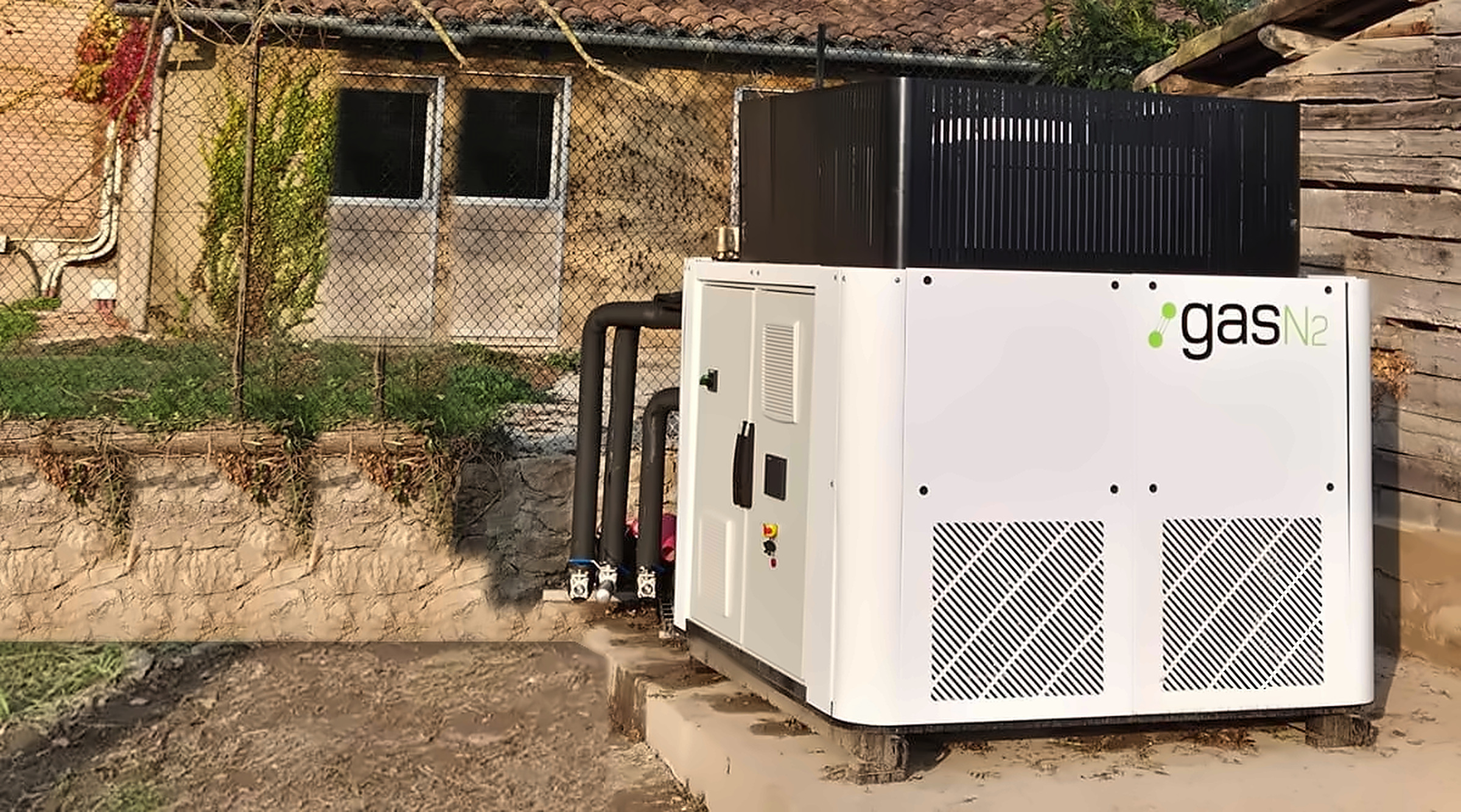
To achieve this, GasN2 designed a cascade heat pump capable of producing cooling and heating simultaneously and independently, tailored to Cal Rovira’s needs.
The goal: optimising thermal management in sausage drying
Industrial drying may require cooling and heat input at different or overlapping times. The ability to manage both demands determines the overall energy efficiency, especially when working with production stages that change over time.
Cal Rovira needed to manage the cooling and heating of its drying system simultaneously and autonomously, within a range of −5 to 90 °C.
The company also wanted to make better use of the energy flowing between the cold and hot sources, rather than covering each need exclusively with separate equipment.
The solution: a cascade heat pump with natural refrigerants
GasN2 implemented a subcritical cascade heat pump with a variable load dissipation system. Its configuration makes it possible to obtain cooling and heating from a single unit and to adapt thermal management to the different operating phases.
How is cooling and heating energy put to use?
A heat pump transfers energy from a lower-temperature source to a higher-temperature one by means of a refrigeration cycle. When a plant needs to cool and heat at the same time, both effects of the cycle can be used to cover demands that would otherwise be met separately.
The variable load dissipator makes it easier to adapt when cooling and heating demands do not coincide. This allows the installation to adjust thermal output to the real operation of the food process.
Cal Rovira technical specifications
The installation produces domestic hot water (DHW) at 80 °C, with a condensing capacity of 17.7 kW and a COP of 3.2 in dual mode (using both cooling and heating at the same time). It uses 100% natural refrigerants (hydrocarbons) with a GWP below 5.
Choosing refrigerants with a low global warming potential reduces the potential climate impact associated with a refrigerant leak.
Benefits: energy efficiency and process flexibility
The main improvement is the coordinated production of cooling and heating. By meeting both demands with a single solution, Cal Rovira has a flexible thermal infrastructure, with the option of managing each service separately.
By covering both demands with a single high-efficiency heat pump, the installation reduces electricity consumption compared with separate cooling and heating equipment.
Its use can be extended to industrial heating, DHW in processes up to 80 °C and industrial refrigeration.
From an environmental point of view, electrifying heat production with a heat pump and using natural refrigerants offer ways to reduce the impacts associated with thermal supply. In addition, because it uses natural refrigerants, the solution is exempt from F-Gas restrictions, and by eliminating combustion from the drying process it improves its environmental profile.
Thermal innovation serving the food industry
The project shows that energy modernisation and traditional know-how can complement each other. Applied engineering allows thermal resources to be used more flexibly without altering the quality goals that define sausage drying.
Cal Rovira’s experience may be relevant for other meat companies looking to optimise their cooling and heating production systems. On our industrial dryers page we explain other engineering applications for this sector.
You can also see the Cal Rovira project in our success stories section. If your company would like to explore a thermal solution tailored to its process, contact the GasN2 technical team.